Seeing the Signs Early: The Importance of Dyslexia Screening
Early Screening
11/26/20251 min read
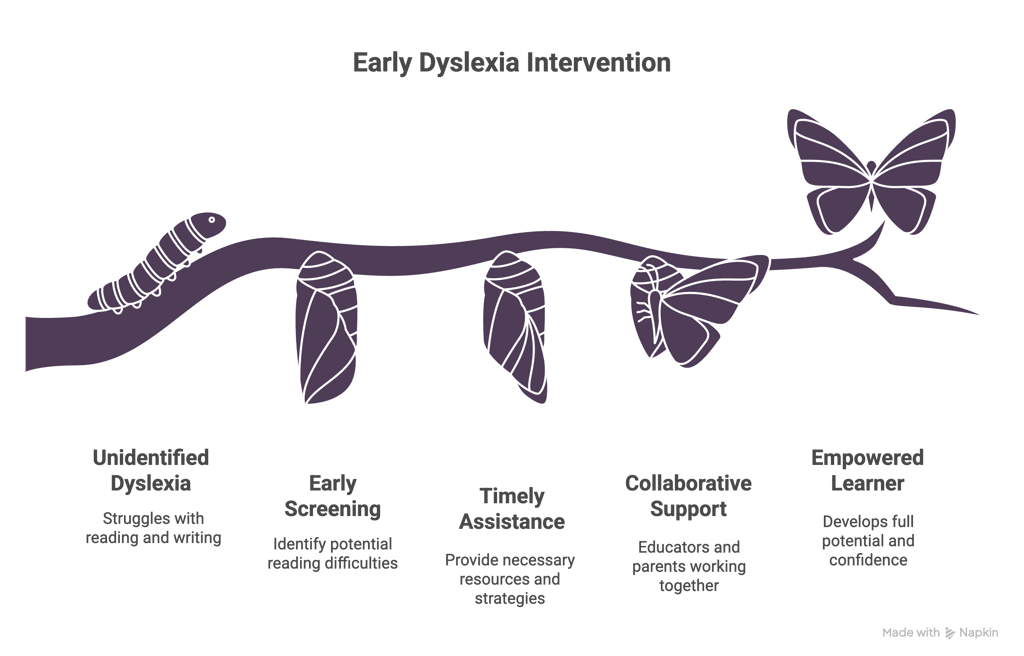
Dyslexia is a common learning difference that affects around 1 in 10 people. It mainly impacts reading, spelling, and writing — not intelligence. Many children with dyslexia are bright, creative, and capable, but without early support they can quickly fall behind in school and lose confidence.
Early screening is usually done between the ages of 4 and 7, when children are developing essential reading and language skills. Identifying potential difficulties at this stage allows for support before problems become long-term.
Early Identification
Why Early Screening Matters
• Better academic outcomes – Early support helps prevent serious reading difficulties later in school.
• Improved self-esteem – Children understand they are not “stupid” or “lazy,” just learning in a different way.
• Earlier intervention – Teachers can adapt methods quickly, using strategies that work best for dyslexic learners.
• Better emotional well-being – Early help reduces frustration, stress, and anxiety related to schoolwork.
• Stronger school–home collaboration – Screening encourages communication between teachers, parents, and specialists.
How Early Screening Can Be Done
Early screening is simple and does not provide a final diagnosis — it only identifies whether a child may be “at risk.” It commonly includes:
• Phonological awareness activities (e.g., identifying rhymes and breaking words into sounds)
• Letter and sound recognition checks
• Memory and listening tasks
• Rapid naming tests, where children quickly name familiar objects, letters, or colours
• Teacher observations, including slow reading, spelling difficulties, letter confusion (such as b/d), and trouble following written instructions
If a child is identified as being at risk, they are referred for a full assessment by a professional, such as an educational psychologist, who can confirm dyslexia and recommend a structured support plan.
What Support May Look Like After Screening
Support may include:
• Structured phonics-based programmes
• One-to-one or small group reading sessions
• Multisensory teaching methods
• Use of assistive technology (e.g. audio or speech-to-text tools)
• Extra time and adapted tasks in assessments
• Encouragement and consistent support at home and school
Early Action, Lasting Impact
Early screening for dyslexia is not about labelling a child. It is about understanding the way they learn and giving them the right tools to succeed. With early support, children with dyslexia can thrive academically, emotionally, and creatively.
Co-ordinates
© 2024 Lowercase Solutions Ltd. All rights reserved. All information, content, and materials on this website are the property of Lowercase Solutions Ltd. and may not be reproduced, distributed, or used without prior written permission.
info@lowercase.org.uk
Registered & Trading Office :The Ingenuity Lab, Room C16, The Ingenuity Centre, University of Nottingham, Jubilee Campus Nottingham, NG7 2TU